From the archive
Al Seeb Fort Restoration Completed, Aims for New Cultural Role
Al Seeb Fort, a 200-year-old landmark in Muscat, has completed restoration.
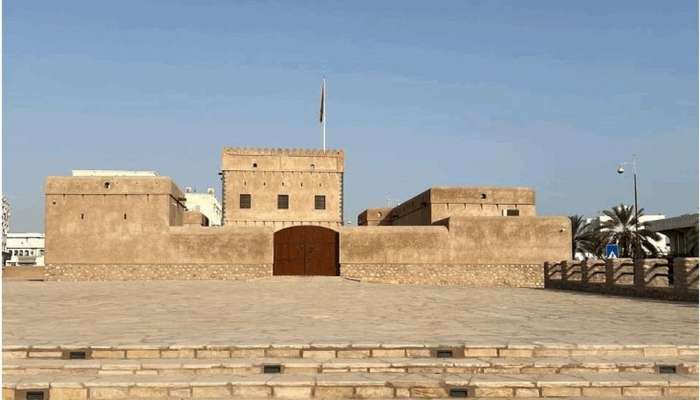
Al Seeb Fort, one of Muscat Governorate’s prominent historical and cultural landmarks, has undergone a full reconstruction project that concluded on October 15, 2025. Work on the fort, located in the Wilayat of Seeb, began on September 11, 2023. The reconstruction aims to prepare the fort for a new cultural role, integrating its rich past with future community engagement. The historical structure, originally built in 1820, was established during the reign of Sultan Said bin Sultan Al Busaidi. This significant landmark has served various key functions throughout its history, reflecting its enduring importance to the region.
Historical Significance and Original Design
The fort originally served as the residence for the Wali and his family, providing a central hub for local administration and governance. It later transitioned to become the administrative headquarters of the Wilayat of Seeb, solidifying its role as a key civic institution. Seeb Fort covers an expansive area of 2,975 square metres, designed to accommodate both residential and administrative needs. The structure includes a main section known as Al Qasaba, alongside various administrative and service facilities. These facilities encompass the Sabla, a dedicated guards' rest area, and a steam room, all integral to the fort's daily operations. Al Qasaba itself is a two-story structure, with two rooms located on each floor. The rooms on the ground floor of Al Qasaba were specifically used as storage areas during the fort's operational history, reflecting the practical needs of its inhabitants. The fort also contains traditional defensive features, including high walls and arrow slits, showing its original strategic importance. A water well is located within the fort's courtyard, providing a vital resource for its occupants.
Restoration Process and Findings
The careful restoration of Al Seeb Fort utilized all available historical evidence, incorporating old photographs, historical sources, and oral accounts to guide the reconstruction efforts with precision. During the initial site cleaning and debris removal phase, remnants of the fort’s original foundations were uncovered, providing key insights into its historical structure and aiding in authentic reconstruction. The upper rooms of Al Qasaba, which initially served as the residence for the Wali and his family, were later converted into offices for the Wali and judge when the building transitioned to serve exclusively as an administrative headquarters. This adaptation allowed the fort to continue its administrative functions effectively. The Sabla, a key communal space, served as a waiting area for visitors to the Wali and judge and also functioned as a council where the Wali met residents. This versatile space was also used for gatherings during important occasions such as Eid Al Fitr and Eid Al Adha, fostering community spirit. The Seeb Wali’s office eventually relocated from the fort to its current premises in November 1994, marking a significant change in the fort's operational history and paving the way for its future cultural repurposing.
Future Plans and Community Impact
The fort, originally constructed in 1820, is now being prepared for its new cultural role, moving beyond its historical administrative functions. In line with these forward-looking plans, a competition was launched in April to determine the future management, operation, and adaptive reuse of the restored structure. The initiative actively seeks innovative proposals that will transform Al Seeb Fort into a vibrant cultural hub, smoothly integrating its profound historical significance with contemporary community needs and aspirations. This transformation aims to ensure the fort remains a dynamic and accessible landmark for future generations.
Expert and Local Perspectives
The Ministry of Heritage and Tourism is now seeking to give the landmark a renewed role while meticulously preserving its historical character and architectural integrity. The upper rooms of Al Qasaba, as noted, originally served as the residence for the Wali and his family, noting the fort's early domestic and administrative importance. The fort also features traditional defensive elements, including high walls and arrow slits, which speak to its historical security considerations, alongside a water well in its courtyard, a testament to self-sufficiency. The Sabla functioned as a waiting area for visitors and a council space, also used for gatherings during Eid Al Fitr and Eid Al Adha, demonstrating its central role in community life and governance.